

 Joris Deene
Having an iconic design, such as a well-known handbag, does not automatically protect against every product that “looks a little like it.” In a ruling of the Brussels Court of Appeal of Jan. 13, 2026, it was held that a holder for dog waste bags does not infringe on the design right of the famous Longchamp ‘Le Pliage’ bag. The decisive factor is the ‘informed user’: if this user sees significant differences in shape and proportions, there is no confusion or infringement, even if there are stylistic similarities.
The facts: luxury bags versus dog accessories
The case revolved around a conflict between French fashion house Jean Cassegrain (known for the Longchamp brand) and Belgian pet supplies wholesaler Vadigran.
Longchamp holds a registered Union Model (formerly Community Design) and copyright on her well-known ‘Le Pliage’ collection, specifically a small wallet with the signature trapezoid shape, flap and button.
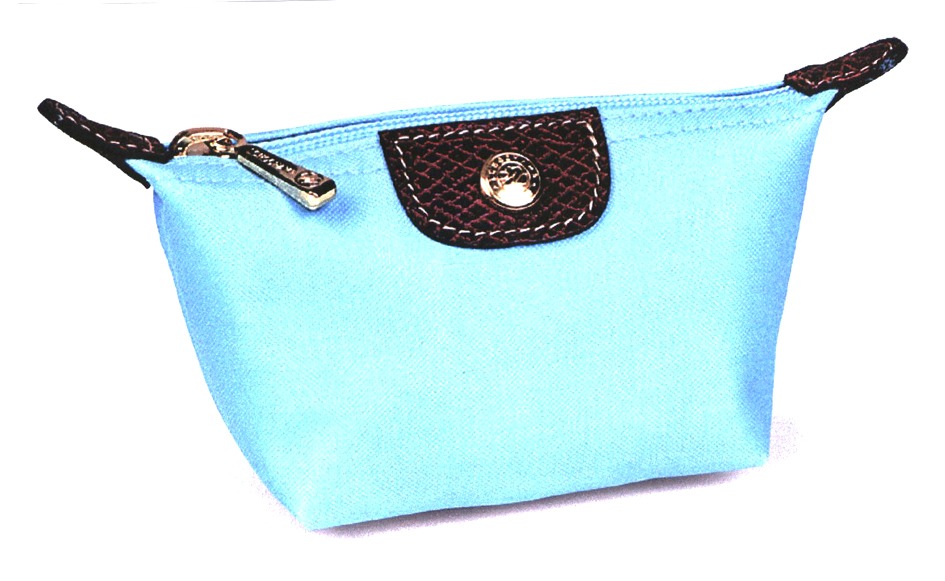
Vadigran marketed holders for dog poop bags that shared certain visual characteristics with Longchamp products (such as the flap and stitching).

Longchamp had Vadigran's stock seized and initiated proceedings for infringement of both its design rights and its copyrights. Vadigran defended itself by arguing that Longchamp's design would not be valid, and furthermore that there was no similarity because their product had a different form and function.
Appeal court decision
The appeal court clarified the boundaries of intellectual property.
The key points of the ruling are:
- Longchamp's model is valid: The Court affirmed that Longchamp's design was ‘new’ and had an ‘individual character. Vadigran's argument that the shape was purely technically determined was rejected.
- No infringement of design right: Despite the validity of the design, the Court ruled there was no infringement. The reason? The ‘informed user’ would not confuse the dog poop bag holder with the Longchamp wallet. The pouch holder was rectangular (not trapezoidal), had different proportions and lacked the specific elegance of the original.
- No copyright infringement: The copyright claim was also rejected. Although the Longchamp design is copyrighted, the original elements (the specific combination of lines) were not reproduced in Vadigran's product.
- No damages for counterfeiting seizure: Although Vadigran won the case in terms of infringement, the Court did not award them damages for the earlier seizure. The Court held that Longchamp had not acted negligently in trying to enforce its rights even if they were ultimately proven wrong.
Legal analysis and interpretation
This ruling provides an interesting look at the confluence of design right and copyright in Belgium and the EU.
The standard of the “informed user”
In design law (regulated by the Union Model Regulation), the touchstone is not the average consumer (as in trademark law), but the “informed user.” As the Court reiterates in this case, this is a fictional person who is not merely average, but highly attentive. This user knows the various designs in the industry and pays attention to details. Because the design freedom in bags is great, even small differences will result in a different “overall impression” for the informed user. This protects competitors who are inspired by a trend, as long as they keep a sufficient distance from the specifics of the protected model.
Concurrence of copyright and design right (Cofemel doctrine)
The ruling confirms the application of European case law (including the Cofemel-ruling and Brompton Bicycle). A utility object may be copyrightable if it is original (its own intellectual creation). However, for infringement there must be an adoption of those specific creative choices. Here, the Court minutely ruled that the elements that make the ‘Le Pliage’ unique (the proportion of the trapezoid shape, the specific lines of the flap) were not found in the rectangular, more utilitarian dog poop bag holder.
Liability in case of seizure regarding counterfeiting
An important procedural point is the dismissal of damages for Vadigran. The mere fact that a seizing party (Longchamp) loses the case on the merits does not automatically mean that the seizure was unlawful or that there was an abuse of rights. For damages based on article 1382 of the Old Civil Code (now article 6.5 Civil Code) a fault or carelessness must be proven. The Court held that Longchamp, as the holder of a valid design, had the right to maintain it.
What this specifically means
This ruling has implications for several players in the market:
- For designers and brand owners: Registration of your design is crucial and useful; it passed the validity test here. However, be realistic in enforcement: not every “lookalike” is legally an infringement. You must demonstrate that the overall impression to a connoisseur is the same.
- For resellers and manufacturers: You may capitalize on fashion trends. Adopting a general “style” (such as a canvas bag with a leather flap) is often allowed, as long as you do not copy your competitor's specific shapes, proportions and unique combinations. Provide sufficient “distance” in the design.
- For parties in litigation: Be careful about claiming damages purely because you win infringement proceedings as a defendant. The right to sue is broadly protected in Belgium; only in cases of clear abuse or frivolity will the losing plaintiff have to pay damages on top of the litigation fee.
Frequently Asked Questions (FAQ)
When is a design protected by model rights?
A design is protected if it is new (no identical design exists) and has individual character (the overall impression is different from existing designs). In the EU, you can register it as a Union model for strong protection.
Can I make a product similar to a well-known brand?
Taking inspiration is allowed, but copying is not. The limit is “general impression.” If an informed user immediately associates your product with the protected design and sees no obvious differences, you are probably infringing.
What is a seizure regarding counterfeiting?
This is a unilateral procedure in which a judge authorizes the seizure or description (often by surprise) of goods to establish evidence of counterfeiting. The seizure order regarding counterfeiting is a powerful weapon for rights holders, the terms of which are regulated by the Judicial Code.
Conclusion
Intellectual property law is a balancing act between protection of creativity and freedom of commerce. As the Longchamp/Vadigran case demonstrates, profits and losses in Belgium are close and much depends on the visual details and interpretation of the ‘informed user.





 Dutch
Dutch  English