
 Joris Deene
A long-term partnership between a manufacturer and its distributor ends. The distributor decides to market its own competing product in packaging very similar to the previous one. This strategic choice can lead to a legal conflict, as evidenced by a ruling by the President of the Brussels French-speaking Enterprise Court on 29 April 2025 . The ruling offers crucial lessons about copyright, trademark rights and the duties of a former distributor.
The facts: the split between Hula Hoops and Croky
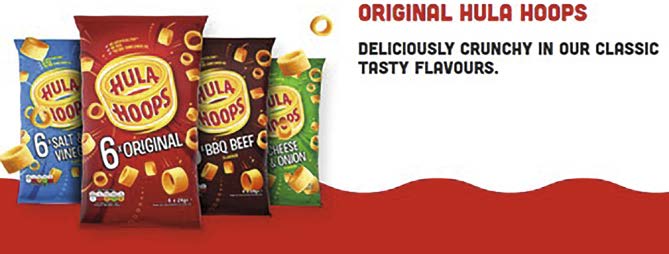
The case revolved around the famous ring-shaped chips Hula Hoops, produced by the Intersnack group. For almost 20 years, these chips were exclusively distributed in the Benelux by Roger & Roger, the producer of the Croky brand. The products were sold in so-called "co-branding" packaging, on which both the "Hula Hoops" brand and the well-known "Croky" logo with the parrot appeared.
In June 2022, Intersnack terminated the distribution agreement, giving notice until July 1, 2024. After that date, both parties went their separate ways:
- Roger & Roger launched its own ring-shaped chips, called "Croky Rings," in packaging that was also very similar to the earlier "Croky Hula Hoops" packaging, obviously without the mention of "Hula Hoops."
- Intersnack launched the Hula Hoops chips again, this time under their own "Chio" brand, in packaging that visually matched the earlier co-branded packaging, but without the Croky elements.
This simultaneous presence of two very similar products and packaging on the market inevitably led to a lawsuit.

The ruling
The president had to consider several claims, including in the area of copyright, trademark rights and fair market practices.
No copyright on the shape of the chips
Intersnack argued that the ring shape of the Hula Hoops chips was an original creation and thus protected by copyright. The president swept this argument aside.
The president ruled that the idea of making a potato chip in the shape of a ring could not be protected by itself. Moreover, the specific shape - a simple, banal cylinder - along with the golden yellow color and crispy texture, was considered banal and inherent in the nature of a potato chip. The shape did not reflect the personality of the creator through free and creative choices and thus was not original enough for copyright protection.

Revocation of the figurative mark Hula Hoops.
A second crucial battle Intersnack lost was over its figurative mark. Roger & Roger argued that Intersnack had not used its registered figurative mark (from 1997) in a "normal way" for the past five years, and claimed for revocation.

The president noted that in recent years the mark had only been used in the co-branded version, with the addition of the highly distinctive elements "Croky" and the parrot. These additions and the altered graphic style of "Hula Hoops" caused the sign used to differ significantly from the originally registered mark. The president decided that there was no genuine use of the registered mark, and therefore declared the revocation of the mark.

Violation of fair market practices
Here Intersnack did gain an important point. The president ruled that when terminating a contract, a former distributor must be careful not to create confusion with its former partner's products.
Roger & Roger had not limited itself to removing the name "Hula Hoops," but had used packaging that was virtually identical. Although Roger & Roger was allowed to use its own Croky brand, and the ring-shaped chips were free of rights, the use of the "flying chips" in the background went too far. This visual element had been part of Intersnack's commercial communications since 1997. By adopting this element on an otherwise quasi-identical package, Roger & Roger violated fair market practices by not sufficiently distancing itself from its former supplier.

Use of the term "The Original" is permitted
Roger & Roger also disputed that Intersnack was allowed to advertise its product as "The Original Hula Hoops." The president ruled that this was not misleading. Since Intersnack is the original manufacturer, this claim is factually correct and not derogatory to competitors.
Legal analysis and interpretation
This ruling illustrates some fundamental principles of intellectual property and commercial law.
- The threshold for copyright on utilitarian objects: This ruling confirms established case law that a form determined purely by technical or functional requirements does not readily qualify for copyright protection. There must be a "personal stamp" of the creator, which is virtually impossible to prove in the case of a simple geometric form such as a ring. The reference to the case law of the Court of Justice (including the Brompton-ruling) is guiding this.
- The importance of proper branding: Trademark revocation is a hard lesson to learn. Registering a trademark is one thing, using it correctly is another. When one uses a trademark in a form that deviates too much from the registration, for example by the systematic addition of another dominant trademark, one runs the risk that it will no longer be considered "genuine use." This can lead to the loss of trademark rights after five years, as was the case here. This is a crucial concern in co-branding strategies.
- The general duty of care after a breach of contract: The most interesting aspect is the conviction based on Article VI.104 of the Code of Economic Law (unfair market practices). Even when there is no concrete infringement of a copyright or trademark right, a former contracting party has a heightened duty to refrain from acts that may cause confusion or unfairly ride on the former partner's fame. The distributor must actively distance itself and develop its own clear commercial identity.
What this specifically means
- For the producer (principal): Don't rely solely on copyright to protect the form of your product; this is legally very difficult. Have strong, registered word and image trademarks and see that they are used correctly, including by your distributors. Clearly define in distribution agreements who owns the rights to the packaging designs. After the relationship ends, you can take action against an ex-distributor who sticks too closely to your branding.
- For the distributor: Be extremely careful when you launch your own competing product after the end of a distribution contract. You may of course use your own brand, but you must develop sufficiently different packaging. Merely removing the manufacturer's brand name is insufficient. Avoid copying distinctive visual elements (such as the "flying chips" in this case) to avoid a conviction for unfair competition.
FAQ (frequently asked questions)
Is the shape of a food product ever protected?
Yes, you can, but it is difficult. The shape of a product is rarely protected by copyright because it is often too functional or "banal" and not the result of free creative choices. Protection is possible through trademark law if the shape is so iconic that it functions as a trademark (such as the Toblerone bar) or through design right, if the shape is new and has a unique appearance.
What is meant by the "normal use" of a trademark?
This means that the trademark owner must use the mark as registered, or in a form that differs only in minor aspects without affecting distinctiveness. A substantial graphic change or the addition of another dominant mark may lead the court to rule that the registered mark itself is not being used.
My distribution contract has ended. May I launch a competing product?
Yes, unless there is a valid non-compete clause in your agreement. However, you must go your own commercial route. You are required to distance yourself sufficiently from your former supplier's products and corporate identity to avoid any confusion or parasitic behavior.
Conclusion
The termination of a long-term distribution relationship requires a careful legal strategy. This ruling shows that intellectual property rights are complex and that the general principles of fair trade practices play a crucial role in Belgium. Just because a product form or trademark is not protected (anymore) does not mean that a former partner has free rein. Clear differentiation in product presentation is essential to avoid legal claims.


 Dutch
Dutch  English